Not Choosing Is Still Choosing

Kate Kong, MA in Digital Studies '26
Recently, I realized something: graduation is no longer far away. Not in the calendar sense of "a couple of months left,” but in the more concrete way—fall recruiting has started, job postings are showing up in my inbox, and people around me are already sending out resumes and getting offers.
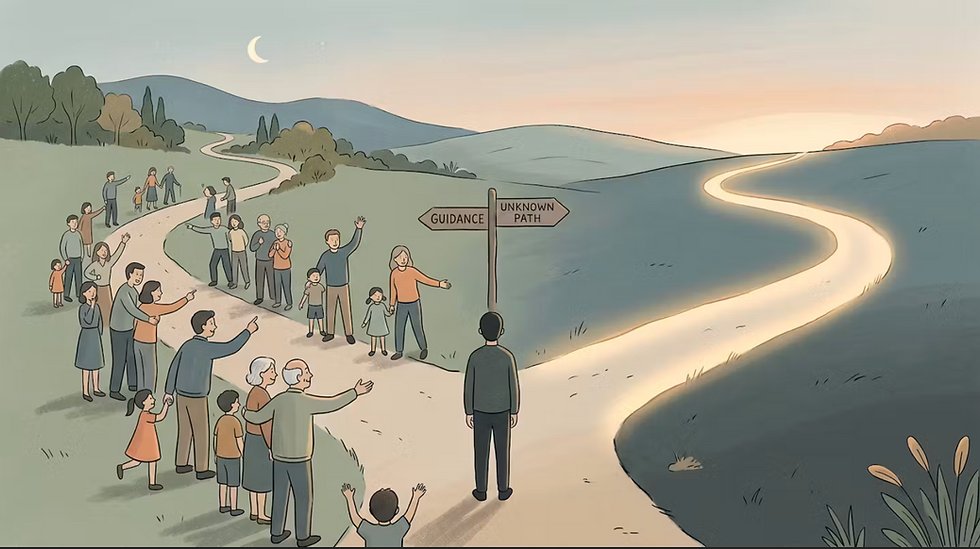
What’s strange is that I never consciously decided not to look for a job. I’ve just been telling myself that I’m not clear enough yet, that I should wait a little longer, as if by not acting, I could keep this decision safely in the future. It all sounds reasonable, even restrained. But after repeating it for long enough, I started to wonder whether I’m actually giving myself time, or just postponing a decision I don’t want to face.
We tend to comfort ourselves this way. Action counts as a decision; inaction feels like a pause, a way to buy more time. But time doesn’t really cooperate with that logic. It doesn’t stop just because you’re “not ready yet.” Recruiting cycles rarely wait until graduation. What I thought belonged to the future had already been pulled into the present by institutional timelines. When you choose not to act, you’re not standing still—you’re handing the choice over to the environment. What follows is rarely “nothing happens,” but the quiet formation of a default path: staying on the current track, accepting fewer options, or making decisions later, under more pressure.
There’s also something deceptively comforting about inaction. It lets you avoid the responsibility of saying, “I chose this.” No clear choice, no clear failure. But the consequences don’t disappear; they’re just delayed, often until the point where turning back is harder. For instance, visa timelines start to feel tighter, money stops being abstract, and decisions gradually stop being about just yourself. The same path, taken later, no longer feels like “trying things out.” It feels more like a bet that has to work.
I don’t remember where I first read this line, but it went something like: “work when you don’t yet need to work, study when you don’t yet need to study, train when you don’t yet need to train.” I used to think it was about discipline. Now it feels more like an observation about time. Once something becomes urgently necessary, the freedom to choose calmly has often already disappeared.
So inaction can feel like restraint, but it’s still a choice—one that delays responsibility now, while leaving the consequences to arrive later.


Comments